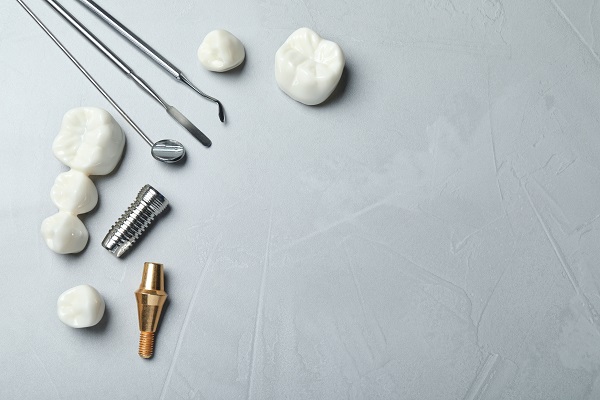
If you are missing one or more teeth, you are probably considering getting them replaced. Dental implants have become a popular option for teeth replacement. Although there are many benefits of this option, it is not necessarily the right choice for everyone. Along with meeting the requirements of what it takes to be a good candidate, you should understand what the procedure involves, as it is a long process.
Benefits of implants
Many people choose implants because of their many benefits. These include:
- Look and function like natural teeth
- Stable foundation for regular speaking and chewing
- Restore bite force
- Prevent changes in facial appearance
- Prevent loss of jawbone
- Last a lifetime with proper care
- Easy to care for
- Increased confidence
Process for dental implants
One thing to be aware of when considering implants is that it is not a quick process. There are numerous steps, and many of them require healing time before the next one can occur. Depending on if additional steps are needed and each individual's healing time, the entire process can range from seven months to longer than a year.
Consultation
The first step is to have a consultation with the dentist to see if you are a candidate for dental implants. The dentist will conduct an exam, including X-rays, to make sure there are no underlying dental issues and that there is adequate jawbone to hold the implants.
Other characteristics of a good candidate include having good oral hygiene habits and being a non-smoker, over the age of 18, and free from illnesses or conditions that interfere with healing or blood clotting. A good candidate should also be patient and understand that the new teeth will not appear in just one or two visits.
Tooth extraction
This is an additional step that not all patients will need. Extraction is called for if you had a decayed tooth that you are going to replace with an implant. The tooth would need to be taken out first, and then the area would need to heal before the implant process could begin.
Bone graft
This is another step that applies to a smaller percentage of patients. Although good jawbone mass is a characteristic of a good candidate, a bone graft may be a possibility for those with insufficient bone density. During the graft procedure, the dentist uses synthetic material or a bone from another place in the body and adds it to your existing jaw. This must heal before implants can be placed, and this can take at least four months.
Placement of implants
The first official step of the implant process is to insert the dental implants, which are titanium rods, into the jawbone. These will provide a stable foundation and serve as the roots of the artificial teeth. The dentist cuts through the gums and then screws in the rods. After this step, time is needed for the gums to heal and for the implants to become part of the bone. Healing time can range from four to seven months.
Placement of cap
Next, the dentist places a healing cap flush with the gums. This is placed right at the end of each implant, and it helps prepare the gum tissue for the next steps. This area needs to heal for up to two weeks before the next step.
Placement of abutment
This consists of attaching a metal connector, known as an abutment, to the dental implants. The gums are cut open to reveal the implants, and an abutment is attached to each one, replacing the healing cap. Because the abutment rises up above the gumline and is visible when the mouth is open, the dentist will usually place a temporary crown to cover it up. The gums then need to heal, which can take up to six weeks.
Placement of the permanent tooth
During the healing time, the permanent crowns, which will be the artificial teeth, will be made in a lab. These are based on a mold of your mouth and teeth, and they match the color and shade of your natural teeth. It takes about two to three weeks for the crowns to be made.
Once the gums are healed and the permanent crowns are ready, the artificial teeth are attached to the dental implants. The dentist will either use cement to hold a crown in place or screw it onto the abutment.
Conclusion
If you need to replace missing teeth, dental implants may be the right choice. Discuss the pros and cons with your dentist and see if you are a good candidate for the procedure.
Request an appointment here: https://hemetdentalcenter.com or call Hemet Dental Center: Brian Stiewel DDS, INC. at (951) 707-4366 for an appointment in our Hemet office.
Check out what others are saying about our dental services on Yelp: Dental Implants in Hemet, CA.
Recent Posts
Dentists have been using dental implants for decades. Many of these dental professionals consider these restorations the gold standard in tooth replacements. Getting implants may be the most rewarding procedure you could ever get. But some people wonder what implants have that natural teeth do not. If you want to know how dental implants compare…
A bone grafting procedure involves the restoration of lost jawbone, which is necessary before dental implant placement if the patient does not have enough healthy jawbone to support the implant long-term. This review discusses dental bone grafting for the purpose of restoring lost jawbone ahead of dental implant placement.Not every dental implants patient requires bone…
Not only does replacing missing teeth restore the smile’s appearance, but it also enhances oral health and helps preserve the jawbone. Dental implants are a reliable, durable solution for patients who require multiple tooth replacements, as they provide stability and a natural look and feel. There is more than one implant option available, with each…
Dental implants often beat out other tooth replacements due to their natural appearance and durability. Although getting them can be a lengthy process, many patients find it a worthwhile one. Proper preparation can contribute to a smooth experience and optimal results. Understanding each phase of the process, making necessary lifestyle adjustments, and following professional recommendations…