Signs and Symptoms of Periodontal Disease
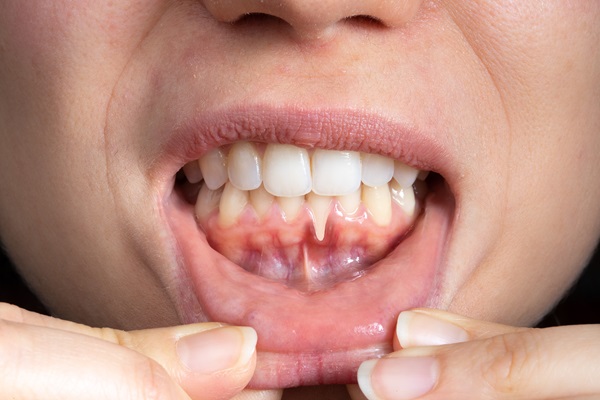
Periodontal disease, or gum disease, can be incredibly concerning and lead to other, more severe oral health issues if left untreated for an extended amount of time. Consequently, it is important to fully understand the various signs and symptoms of periodontal disease in order to be able to spot periodontal disease as soon as it develops and to seek prompt treatment.
Symptoms of periodontal disease
The symptoms of periodontal disease are usually progressive and have a fairly slow onset, which is why it is important to thoroughly check your gums on a routine basis. When checking the gums for symptoms of periodontal disease, look for the following common signs.
Swollen gums
The most prevalent symptom of periodontal disease — and the one that is usually the first to exist — is swollen gums. When the gums are subject to bacteria and other harmful substances, they become weak and vulnerable to infection, which causes them to swell. In addition to the swelling, the gums are likely to become a much brighter red in the early stages of periodontal disease, and more serious signs of periodontal disease are likely to follow in the absence of treatment.
Bleeding gums
Bleeding gums is one of the more well-known symptoms of periodontal disease. When gum disease develops, the gums almost always are vulnerable to bleeding during one’s daily care routine. If gums begin to bleed while brushing, flossing, or eating, it is important to visit the dentist for the diagnosis and effective treatment of periodontal disease to ensure the symptoms do not worsen.
Receding gums
Receding gums are a more serious symptom of gum disease that should be treated with a sense of urgency. While it is not indicative of any long-term effects, receding gums can quickly be followed by teeth becoming loose, which can cause a need for invasive dental procedures to avoid tooth loss. Receding gums makes the tooth appear longer, and it can often be hard to notice. Be sure to check for signs of receding gums each day, and visit the dentist if your gums are believed to be receding.
Bad breath
Gum disease is often caused by an accumulation of plaque and tartar — which contains bacteria — on the gums and gum line. When this buildup of bacteria occurs, it can give off a bad odor and cause bad breath. If bad breath exists with other symptoms of periodontal disease, a trip to the dentist for diagnosis and treatment is likely required.
Loose teeth
Periodontal disease can eventually lead to complete tooth loss if the earlier symptoms of periodontal disease are ignored and not properly treated. Before tooth loss occurs, however, the teeth will become loose, which usually takes place after the gums are weakened and recession of the gums occurs. If teeth are loose due to periodontal disease, it is incredibly important to visit the dentist as soon as possible to try and save the tooth from becoming lost, resulting in the need for expensive teeth replacement procedures.
Treatment options for periodontal disease
The recommended treatment option for periodontal disease depends on the stage in which it is diagnosed; gingivitis is far easier to treat than periodontitis. Here is a more detailed look at how a dental professional may treat periodontal disease.
Gingivitis treatment
Gingivitis is a less severe form of periodontal disease. Swollen gums, bleeding gums, and gum irritation are the most common symptoms of gingivitis. Since gum recession is not typically severe with gingivitis, it is easier to treat. Often, all that is necessary is improvements in the patient’s oral care routine and a routine dental cleaning. In other cases, an antibacterial mouthwash prescription and/or scaling and root planing procedure may be recommended.
Periodontitis treatment
Periodontitis is a progressive form of periodontal disease that most often causes gum recession and deep gum pockets. Periodontitis treatment usually begins with scaling and root planing; this cleans beneath the gum line to remove plaque and tartar. A gum graft procedure may also be necessary for severe gum recession. Deep gum pockets may need to be treated with pocket reduction surgery in more severe cases.
Are you experiencing symptoms of periodontal disease?
If you have symptoms of periodontal disease such as those discussed above, then we encourage you to call our office today to schedule a visit. We are more than happy to assist you in determining the status of your oral health and the best treatment plan for periodontal disease.
Request an appointment here: https://hemetdentalcenter.com or call Hemet Dental Center: Brian Stiewel DDS, INC. at (951) 707-4366 for an appointment in our Hemet office.
Check out what others are saying about our dental services on Yelp: Gum Disease in Hemet, CA.
Recent Posts
Gum disease is one of the most common oral health issues dentists encounter in patients of all ages. It can range from mild gum irritation to severe conditions that affect the tissues and bones supporting your teeth. The root cause of gum disease is typically the accumulation of plaque on the teeth and gums. Understanding…
Gum disease is a common yet serious condition that negatively impacts oral health if left untreated. The condition can result from plaque and bacteria buildup, starting with mild symptoms and leading to tooth loss. Knowing the stages of gum disease and when to seek treatment can help protect your gums and teeth.Gum disease, or periodontal…
The CDC states that gum disease, also known as periodontal disease, is one of the leading oral infections in the United States. In addition, the National Institute of Health cites it as the most common culprit for adults losing teeth. Because the early stages of periodontal disease often do not have noticeable symptoms, many patients…
Gum disease is one of the most common oral health issues. Many individuals, however, are unaware that they are dealing with the condition. Gum disease is believed to affect millions of adults in the United States, according to the International Journal of Health Sciences. Many people who do not currently have gum disease may develop…