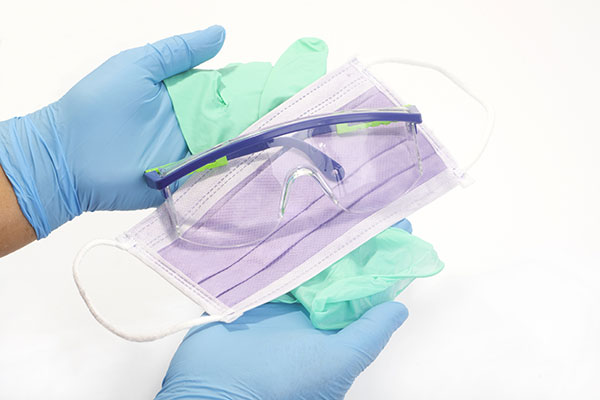
 Dentists protect themselves from bacteria and viruses by using PPE per CDC guidance. The CDC has outlined different types of personal protection equipment (PPE) dentists should use. The CDC has announced more guidelines during the COVID-19 outbreak. Find out what your dentist will wear when treating you.
PPE per CDC guidance — what to expect
Dentists wear PPE to protect various body parts during dental procedures. The equipment protects dentists’ faces, eyes, hands and bodies. By wearing the equipment, dentists can treat patients without catching transmittable diseases. This allows dentists to provide emergency services during the COVID-19 outbreak.
Face protection
Surgical masks cover the mouth and nose. Dentists should wear these masks when in contact with blood and bodily fluids. Also, dentists and hygienists wear surgical masks when using manual instruments. These instruments are often used to clean the teeth. Manual instruments can cause bacteria and fluids to fly in dentists’ faces. Surgical masks do not provide ample protection during the COVID-19 crisis, though. These masks do not filter airborne particles that cause the disease.
When performing emergency procedures during the pandemic, dentists should use N95 respirators. This is in place of surgical masks. These respirators filter airborne particles, including the particles that cause COVID-19. The mask is called an N95 because it blocks a minimum of 95% of 0.3-micron particles. If possible, dentists can use higher-quality masks that block even more particles.
Dentists who do not have access to an N95 respirator can use a full-face shield and surgical mask for protection. First, dentists must ensure the FDA approved the mask. If it did, the mask can be used and discarded after treatment. The face shield must be cleaned. After cleaning the face shield, the dentist can use it again.
Protective eyewear
During the COVID-19 pandemic, dentists should wear protective eyewear during all procedures. Otherwise, dentists use eyewear as protection when blood or body fluids are present. Protective eyewear is reusable. Dentists must clean and sanitize it after use, though.
Protective clothing
Dentists who use PPE per CDC guidance also wear protective clothing. During the coronavirus pandemic, the CDC recommends dentists wear gowns. At other times, dentists can use gowns or jackets. These items protect street clothes when performing procedures. This helps a dentist avoid bringing germs and bacteria home with them.
Gloves
Disposable gloves are very important during the COVID-19 pandemic and other times. Dentists contact blood and mucous membranes, for example. By wearing gloves, dentists avoid transmitting microorganisms to the patient. Dentists should have patient examination gloves and surgeon’s gloves on hand. Gloves should be discarded after each use.
Using PPE per CDC guidance is critical for dentists
Dentists always want to protect their patients. Following the CDC’s guidance regarding PPE is one way to do that. PPE prevents the transfer of viruses and bacteria. That reduces the risk of infections during treatment. The equipment is more important than ever before. It can help prevent the spread of COVID-19 in dental offices.