Improve Your Oral Health With a Dental Bridge
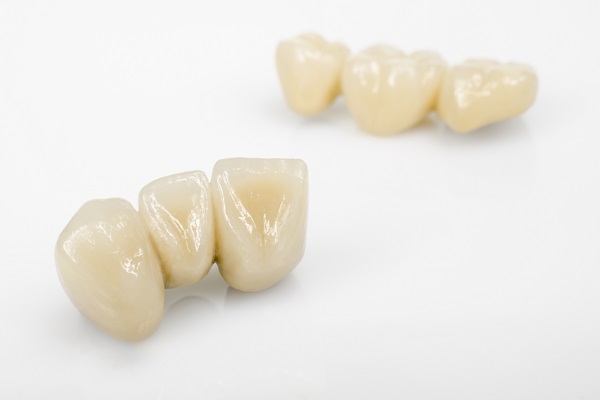
Think you might need a dental bridge? Read on to learn more about this restoration. According to the National Institute of Craniofacial and Dental Research, adults aged 20–64 have an average of three decayed or missing teeth. A dental bridge is among the most important restorative dentistry procedures, helping to restore optimal dental health and function. This treatment largely depends on the location of the missing tooth, the condition of existing teeth, and the patient’s oral health.
An overview of dental bridges
As its name implies, this restoration "bridges" the gap created by one or more missing teeth. Made of one or more prosthetic teeth (pontics), bridges are attached to adjacent teeth or implants (called abutments). This restores the full smile look and distributes bite forces evenly, preventing the remaining tooth from wandering out of place, which is common with lost teeth.
Various kinds of dental bridges exist, and each is suited to a particular situation or need:
Traditional bridges
Traditional bridges are the most common bridges used to fill in a gap left by missing teeth. This type of bridge consists of one or more artificial teeth (pontic) attached to tooth crowns on either side. As support pillars, the crowns are cemented on the natural teeth next to the space. This technique is a strong and stable option that restores the function of the missing teeth and improves the look of the smile. For a conventional bridge, the process begins with the preparation of the adjacent tooth by reshaping them to match the crowns, which form the base of the pontic.
Cantilever bridges
If there are adjacent teeth on only one side of the missing teeth or tooth, cantilever bridges are a great solution. Like traditional bridges, the cantilever bridge is held up by one natural tooth near the gap. A crown is placed on this tooth, to hold the pontic in place. Cantilever bridges are particularly helpful in areas of the lower palate where bite pressure is not as significant, like the front teeth. They require a tooth strong and healthy enough to support the bridge to ensure the stability of the dental cavity.
Maryland bridges
Maryland bridges are a conservative alternative to conventional bridges, especially for front teeth where aesthetics are important. This bridge has a pontic attached to the metal or porcelain frame at the rear of adjacent teeth. Maryland bridges require less tooth preparation compared to conventional bridges and therefore, retain more of the natural tooth structure. Maryland bridges are less intrusive and provide an aesthetic remedy. However, they are less strong than conventional bridges and their dependence on the bonding power to the adjacent teeth may cause them to lose stability under strong biting forces.
Implant-supported bridges
Implant-supported bridges can be used to replace missing teeth without having to alter adjacent natural teeth. These bridges are anchored against implants that are surgically placed in the jawbone, instead of being supported by the adjacent tooth. Each implant provides the bridge with its stability and distributes forces uniformly across the jaw to mimic the natural roots of the tooth. Implant-supported bridges can replace several missing teeth and preserve the facial structure and function of the smile. This bridge is comparable to natural teeth in appearance and function and may last many years if properly maintained.
Getting a dental bridge
There are several steps involved in getting a dental bridge:
- Preparing abutment teeth: The teeth adjacent to the missing gap are reshaped to fit the crowns that will support the bridge.
- Impressions and model creation: Impressions of the teeth are taken and used to produce an exact model of the bridge to ensure a custom fit.
- Placement of temporary bridge: To protect the teeth and gums, a temporary bridge might be installed while the permanent bridge is being made.
- Permanent bridge fitting: After the permanent bridge is ready, the temporary one is removed. The final bridge is adjusted and cemented in place.
Oral health and dental bridges
More than a cosmetic improvement, dental bridges can also help in other ways. They can help keep the mouth healthy and functional. Bridges prevent the remaining teeth from shifting, maintain the bite position, and prevent jaw bone loss by filling in the gaps. They also support clearer speech, efficient chewing, and less stress on the dental arch.
The bottom line
A dental bridge provides a stable, aesthetic, and functional replacement for missing teeth. They improve the look of your smile, as well as the condition of your general oral health preventing future dental problems. If you have missing teeth, contact our dental office today to set up an appointment.
Request an appointment here: https://hemetdentalcenter.com or call Hemet Dental Center: Brian Stiewel DDS, INC. at (951) 707-4366 for an appointment in our Hemet office.
Check out what others are saying about our dental services on Yelp: Dental Bridges in Hemet, CA.
Recent Posts
Choosing a dental bridge can restore a complete smile and make everyday tasks feel easier again. Missing teeth change chewing, speech, and face shape, but a well-planned bridge brings balance back. With the right design and consistent home care, a dental bridge can look natural, feel comfortable, and support long-term oral health.A dental bridge fills…
Dental bridges can replace missing teeth effectively and often without needing surgery. Not only will this restore the smile, but it also helps patients avoid the negative oral health effects of missing teeth. A general dentist can determine whether a patient is a good candidate for bridges in a consultation. However, learning the basics can…
A dental bridge is a reliable, effective solution for tooth loss, as it offers functional and aesthetic benefits. This dental restoration helps improve chewing, speech, and overall oral health while maintaining the smile’s natural structure. Patients interested in bridges as tooth replacements can benefit from learning more about their basics, placement process, and long-term care…
For people who have missing teeth, dental bridges can be used to improve the appearance and restore the function of their teeth. This treatment is particularly beneficial for patients who have one or more missing front teeth.A bridge consists of crowns that are placed on both sides of the missing tooth or teeth that provide…