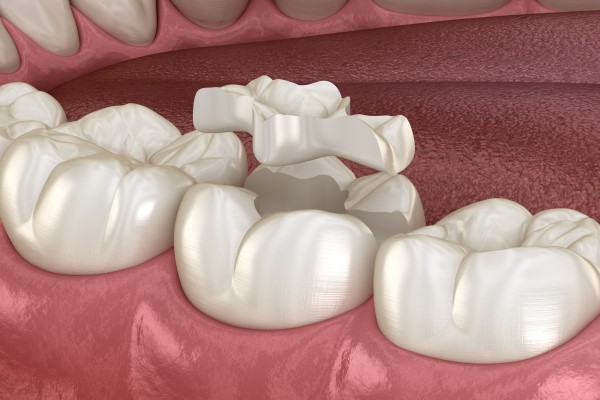
A dentist may recommend a dental inlay to repair dental cavities or other forms of damage that affect the interior portion of the tooth (the grooves of teeth). Inlays are more commonly placed on molars and premolars rather than on teeth that are toward the front of the mouth and more visible.
The role of a dental inlay in dentistry
Many are less familiar with a dental inlay than a dental crown. There are a few similarities between the two, but there are also notable differences. The following review discusses what a dental inlay is, how it compares with alternative restorations, and when a dentist may recommend a dental inlay.
What is a dental inlay?
It is a type of dental restoration used to repair decay or damage in the grooves (chewing surfaces) of teeth. It is similar to a dental crown, but it only covers the inner part of the tooth, whereas a crown covers the entire tooth on all sides. A dental inlay is typically made of ceramic or metal material.
When might a dentist recommend a dental inlay?
Dental inlays are commonly used by dentists to treat dental cavities. It is often seen as an alternative to a dental filling and can be just as effective for treating minor to moderate-sized cavities caused by dental decay. A dental inlay can also treat other forms of teeth damage, such as chips or cracks to the grooves of teeth.
A dental inlay vs. alternative dental restorations
A dental inlay covers the grooves of teeth. It is different from a crown, which covers both the grooves and the cusps of teeth. A dental onlay covers the cusps of teeth but not the inner portion of the tooth. A dental inlay is different from a dental filling because an inlay is a single piece of material, whereas a filling using an amalgam is a material that is coated over the cavity. Dental inlays can also repair more than dental cavities, whereas a filling is almost exclusively used for cavities.
How to care for a dental inlay after placement
A dental inlay can last for more than a decade in many cases when the tooth is properly cared for by brushing regularly and using floss and mouthwash as recommended by the patient’s dentist. Regular check-up visits are also encouraged. Many patients who choose a dental inlay get used to it and do not notice that they have the restoration a few days after the inlay is placed by the dentist.
Get in touch with us today to schedule a dental visit
Our team is available by phone or message and is glad to answer your questions about dental restorations such as a dental inlay during a consultation visit. We treat a range of concerns and offer dental inlay treatment, and we take pride in helping our patients through the treatment process.
Request an appointment here: https://hemetdentalcenter.com or call Hemet Dental Center: Brian Stiewel DDS, INC. at (951) 707-4366 for an appointment in our Hemet office.
Check out what others are saying about our dental services on Yelp: Dental Inlay in Hemet, CA.
Recent Posts
Searching "emergency dentist near me" is the best course of action when sudden dental trauma or intense pain makes it impossible to function normally. Dental crises range from dull aches that suddenly sharpen to significant physical injuries that compromise the appearance and function of the smile. Identifying the specific signs of a true dental emergency…
Your cosmetic dentist can treat your teeth with aesthetic materials. Research reveals that many people prefer tooth-colored fillings for any dental repair. The general dentist uses the same material to keep cavities at bay. Knowing how a cosmetic dentist restores teeth with tooth-colored fillings can help prepare you for your upcoming treatment.A cosmetic dentist can…
When it comes to improving the appearance of your smile, choosing the right cosmetic dentist can make all the difference. A great cosmetic dentist blends artistic skill with dental expertise, creating results that look natural and complement your overall facial features. Understanding what to look for can help you feel confident in your choice and…
A cosmetic dentist can rejuvenate your smile and elevate your self-esteem. Visiting the provider for a consultation will give you a preview of what your treatment will be like. Your dentist will explain what aspects the treatment will cover that can help enhance your experience. Below are the things to expect during your cosmetic dentist…