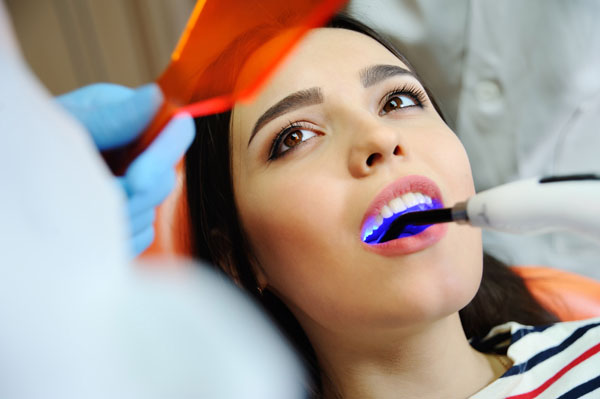
There may be dental restorations available to treat a tooth that is damaged. The prognosis for restoring a damaged tooth is best when treatment takes place as soon as possible after the tooth breaks or cracks. This can occur from biting down on something that is too hard but can also happen if you get hit in the mouth. The longer you wait after breaking a tooth, the less likely it is that a dentist can restore it.
Does a broken tooth hurt?
Whether a broken tooth hurts depends on how deep the damage goes. The nerves in a tooth are in the dentin and the pulp, which are protected by the layers of hard enamel on the outside. If the crack or fracture exposes the pulp and the dentin, it can cause pain.
However, the tooth enamel has no nerves, nor any blood vessels. It would not be able to perform the work of chewing if it did because the act of biting down would cause pain. If a fracture or crack extends no deeper than the enamel, you typically experience very little, if any, pain from it. However, this does not mean that a broken tooth that does not hurt can be ignored.
What can happen if a broken tooth goes untreated?
Without appropriate dental restorations in a timely manner, a broken tooth can lead to other dental health problems.
Bacterial infection
Even a crack in the tooth's surface may be enough to allow bacteria to reach the dentin and the pulp of the tooth. The bacteria may proliferate and cause an infection. This can spread to the gums and, if it gets into the bloodstream, even affect other areas of the body far away from the mouth.
Sensitivity
Exposure of the nerves inside the tooth's pulp, as well as bacterial infection, could cause the teeth to become sensitive. You may feel a twinge of pain with temperature changes inside your mouth or pressure on the damaged tooth.
Soft tissue lacerations
A broken tooth can leave behind a sharp edge. Soft tissues in your mouth, such as the cheeks or the tongue, may rub up against the edge. These tissues are very delicate and can get cut from contact with the hard, sharp edge of a broken tooth.
Further damage
A tooth that is cracked or broken becomes weak and unstable. Subjecting it to the normal pressures of eating and chewing may be more than it can take, and it could break further. Eventually, the tooth may be so severely damaged that it can no longer be fixed by dental restorations.
Damage to other teeth
Teeth are intended to stand up to a lifetime of chewing, so the enamel is very hard. If a piece of a tooth breaks off in your mouth while you are eating, you may not feel it or notice it if it only involves the enamel. While the broken piece is floating around in your mouth, you may accidentally bite down on it, potentially damaging another tooth.
Conclusion
It may be possible to use dental restorations to fix a broken tooth. However, the chances decrease with delays in the treatment.
Request an appointment or call Hemet Dental Center: Brian Stiewel DDS, INC. at 951-707-4366 for an appointment in our Hemet office.
Recent Posts
A dental restoration is a treatment that rebuilds or replaces damaged tooth structure to restore full function and aesthetics. Whether addressing decay, fractures, or missing teeth, a dental restoration supports long-term oral health and helps preserve the natural smile. From simple fillings to more advanced solutions like bridges and onlays, each type of restoration offers…
As you age, your teeth face challenges from numerous issues. Daily wear from chewing food or stress-related grinding, gum problems from bacteria build-up, and tooth damage from the foods and drinks you consume all play a role in the deterioration of your smile.You and your dentist share a common goal: caring for and preserving your…
At some time or another, most individuals will need dental restoration. Restoring teeth is necessary when the teeth are in poor condition due to decay or a lack of proper oral care. Modern dentistry offers a wide variety of options for dental restorations.There are so many fantastic alternatives when it comes to dental restorations that…