A Guide to Partial and Full Arch Dental Implants
Dental implants are a permanent, functional solution for patients with tooth loss in one or both dental arches. Both partial and full arch dental implants have become more accessible, customizable, and successful for a wide range of patients. However, they have different uses and candidacy requirements. Understanding the differences between these options helps clarify which treatment best suits each person's level of tooth loss, oral health, and lifestyle.
How dental implants replace teeth
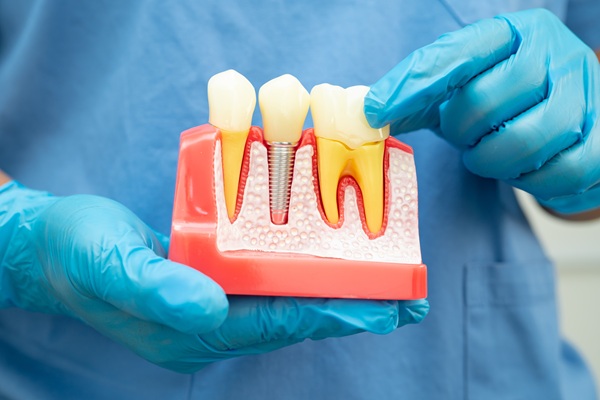
Dental implants function as artificial tooth roots, offering a durable base for replacing one or more missing teeth. Crafted from biocompatible titanium, the dental provider surgically places an implant into the jawbone where it naturally integrates with surrounding bone tissue. This process (osseointegration) allows for a secure, long-lasting foundation that supports dental restorations like dental crowns, bridges, or partial or full arch dentures.
For clarity, the implant structure includes three main components:
- The implant post. The new artificial tooth root.
- The abutment. Connects the implant and the final restoration.
- The prosthetic tooth or teeth. The visible part of the restoration.
The ability of implants to mimic the root system of natural teeth makes them one of the most stable and functional restoration methods available. Unlike removable dentures, implants restore chewing force and help maintain jawbone density by stimulating the bone during daily activities. They also help preserve the jawbone and avoid the facial sagging that often results from tooth loss.
Partial arch dental implants
Partial arch dental implants are ideal for patients who have lost several teeth in a particular section of the mouth. These implants may support one or more crowns or a bridge, depending on the number of missing teeth and the location of the gaps. Unlike traditional bridges, which rely on neighboring natural teeth for support, implant-supported bridges rely on strategically placed implants. This preserves the health of remaining teeth and reduces the need for reshaping healthy enamel.
How they stack up against other options
Partial arch dental implants bypass the limitations of traditional tooth replacements, like flipper teeth and traditional dental bridges. Implants preserve the integrity of surrounding teeth, promote jawbone health, and provide a custom, fixed solution that blends seamlessly with natural dentition. While traditional options also blend with the rest of the teeth and keep them in place, they are not as stable, durable, or comfortable as implants. Further, they do not preserve the integrity of the jawbone.
Full arch dental implants
Full arch dental implants replace an entire row of missing or non-restorable teeth in either the upper or lower jaw. Rather than using a single implant for each missing tooth, this approach typically relies on four to six strategically placed implants to support a full, permanent prosthetic arch. This configuration efficiently distributes bite force and provides exceptional stability.
One of the leading systems in this category is the All-on-4® dental implant system, where four implants support a full set of fixed teeth. The rear implants are angled to maximize contact with existing bone, making this approach suitable even for patients with some bone loss. Other full arch dental implants may use additional implants for extra support, depending on the patient's anatomy and treatment goals.
How do they compare to dentures?
Full arch dental implants differ significantly from traditional removable dentures. While dentures rest on the gums and are held in place through suction or adhesive, implant-supported arches are fixed into place, offering superior stability and comfort. This eliminates slippage, sore spots, or difficulty chewing harder foods, among other common concerns.
Traditional removable dentures also do little to stop the progression of bone loss in the jaw. Without the stimulation provided by tooth roots or full-arch dental implants, the jawbone will gradually shrink. The face will start to appear sunken over time, and the removable dentures will eventually become ill-fitting and need to be relined or replaced. Full arch dental implants actively preserve bone tissue by stimulating the jaw with every bite and chew.
Functionally, full arch dental implants restore near-complete chewing ability so patients can eat a varied, unrestricted diet. Aesthetically, they also match facial features and smile preferences for natural-looking results. Many patients also experience a dramatic boost in confidence and oral function following this treatment.
Finally, the maintenance of full arch implants is simpler and more hygienic than traditional dentures. Since they are fixed in place, there is no need for nightly removal, soaking solutions, or adhesives. However, daily oral hygiene and regular dental visits help keep both the implants and the surrounding tissues in optimal condition.
Explore your smile restoration options
Both partial and full arch dental implants provide advanced, reliable solutions for patients facing tooth loss. Understanding the advantages of each option, especially when compared to traditional treatments, allows patients to make informed decisions about their long-term oral health. Contact our Hemet office today to discover your smile restoration options.
Request an appointment here: https://hemetdentalcenter.com or call Hemet Dental Center: Brian Stiewel DDS, INC. at (951) 707-4366 for an appointment in our Hemet office.
Check out what others are saying about our dental services on Yelp: Dental Implants in Hemet, CA.
Recent Posts
A bone grafting procedure involves the restoration of lost jawbone, which is necessary before dental implant placement if the patient does not have enough healthy jawbone to support the implant long-term. This review discusses dental bone grafting for the purpose of restoring lost jawbone ahead of dental implant placement.Not every dental implants patient requires bone…
Not only does replacing missing teeth restore the smile’s appearance, but it also enhances oral health and helps preserve the jawbone. Dental implants are a reliable, durable solution for patients who require multiple tooth replacements, as they provide stability and a natural look and feel. There is more than one implant option available, with each…
Dental implants often beat out other tooth replacements due to their natural appearance and durability. Although getting them can be a lengthy process, many patients find it a worthwhile one. Proper preparation can contribute to a smooth experience and optimal results. Understanding each phase of the process, making necessary lifestyle adjustments, and following professional recommendations…
Dental implants provide a durable and natural-looking solution for missing teeth. This popular teeth replacement option can last many years with proper care, improving the function and appearance of your smile. Practices like following a good oral hygiene routine, adopting healthy lifestyle habits, and scheduling regular follow-ups can all help contribute to the overall longevity…