When Would You Need Dental Implants?
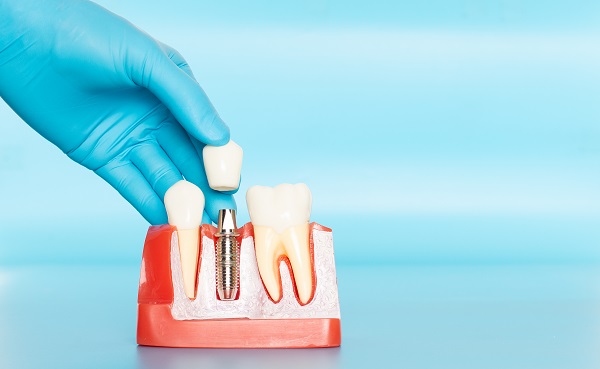
If you have ever critically damaged or lost a tooth and had it repaired, you probably had a dental implant set. A dental implant is a metal fixture installed by a dentist that fuses to the jawbone via a process called osseointegration. This allows for artificial teeth to be securely placed on top of it. Dental implants replace tooth roots with small posts that are normally made of titanium. A dentist then connects an abutment on or into the dental implant which attaches to the crown. A person could need dental implants for several reasons, and there is more than one type of dental implant.
Why someone might need a dental implant
A dental patient could need a dental implant for the obvious reason that he or she is missing a tooth. Any adult with one or more missing teeth could be a candidate for dental implants. In some cases, teenagers are eligible for them if their facial bone formation is complete.
Someone who has dentures that are restricting their ability to eat and converse freely may also be a candidate for dental implants. If you need dental implants, see a dentist quickly after losing a tooth. Waiting too long could result in the need for bone graft surgery to restore the jawbone enough to carry implants.
Enhanced appearance
Dental implants can fill one or more gaps in your mouth with a natural-looking artificial tooth known as a crown. Though a missing tooth, especially in the front of the mouth, is a cosmetic concern, it can also cause bone loss. Implants assist in the preservation of bone and promote further bone growth. This restricts facial regression. Further, it diminishes the possibility of gum disease and additional tooth loss.
Better speech
With missing teeth or ill-fitting dentures, your speech can be affected. Dentures can slip or move, thereby causing slurred or mumbled speech. Missing teeth can also cause lisps or other language issues that are embarrassing and frustrating. Because dental implants are permanently affixed to your jaw, they allow you to speak without anxiety.
Increased comfort
Dentures can cause sores in the mouth, especially if they do not fit correctly. They are also removable, so you must use adhesive to get them to stay in place. Once dental implants are placed in your mouth, you do not need to fuss with them other than to care for them as you would natural teeth.
Easier chewing
Since dentures are notorious for coming out of place, they can make chewing difficult. Likewise, gaps in the mouth make eating uncomfortable or challenging. Dental implants restore the functionality of the mouth allowing those with them to consume food conveniently.
Improved self-esteem
Missing teeth or uncomfortable dentures are often sources of humiliation for those dealing with them. Dental implants restore patients' smiles and give back their sense of confidence.
Better oral health
Other tooth loss solutions, such as bridges, sometimes require the reduction of surrounding teeth. Implants allow you to keep more of your natural teeth which improves your long-term overall oral health. Further, individual implants allow access between teeth, increasing the patient's ability to brush and floss as efficiently as possible.
The two types of dental implants
Before committing to a dental implant, your dentist will converse with you about which kind is best for you. There are two general types of dental implants: Endosteal and subperiosteal.
An endosteal implant is the more common type of fixture. Made of either titanium screws or blades, these are inserted where your missing teeth should be. After four to six weeks, the abutment is attached to the implant and artificial teeth can then be placed on top of it.
Subperiosteal implants are a little different from endosteal implants in that they rest on top of the jawbone instead of fusing to it. Your dentist may recommend these instead of an endosteal implant if your jaw is not suitable for endosteal. Subperiosteal implants might also be a better option if you want new teeth faster, as they have a briefer healing process before the teeth can be mounted.
Conclusion
Dental implants can take a damaged or lost tooth and replace it with an artificial one. Their installation is usually relatively painless and can restore your smile. Because there is more than one type of dental implant, you might have some choice as to what kind you can get. People with missing teeth or dentures may be candidates for dental implants. There are many benefits to them and they generally improve their wearer's quality of life.
Request an appointment here: https://hemetdentalcenter.com or call Hemet Dental Center: Brian Stiewel DDS, INC. at (951) 707-4366 for an appointment in our Hemet office.
Check out what others are saying about our dental services on Yelp: Dental Implants in Hemet, CA.
Recent Posts
Dentists have been using dental implants for decades. Many of these dental professionals consider these restorations the gold standard in tooth replacements. Getting implants may be the most rewarding procedure you could ever get. But some people wonder what implants have that natural teeth do not. If you want to know how dental implants compare…
A bone grafting procedure involves the restoration of lost jawbone, which is necessary before dental implant placement if the patient does not have enough healthy jawbone to support the implant long-term. This review discusses dental bone grafting for the purpose of restoring lost jawbone ahead of dental implant placement.Not every dental implants patient requires bone…
Not only does replacing missing teeth restore the smile’s appearance, but it also enhances oral health and helps preserve the jawbone. Dental implants are a reliable, durable solution for patients who require multiple tooth replacements, as they provide stability and a natural look and feel. There is more than one implant option available, with each…
Dental implants often beat out other tooth replacements due to their natural appearance and durability. Although getting them can be a lengthy process, many patients find it a worthwhile one. Proper preparation can contribute to a smooth experience and optimal results. Understanding each phase of the process, making necessary lifestyle adjustments, and following professional recommendations…